When it comes to protecting and adding aesthetics to metal surfaces, two great finishing options are powder coating and anodizing. Both offer excellent protection against corrosion and wear, but they work in different ways and serve completely different purposes.
Understanding the key differences between these processes can help you make the right choice for your project.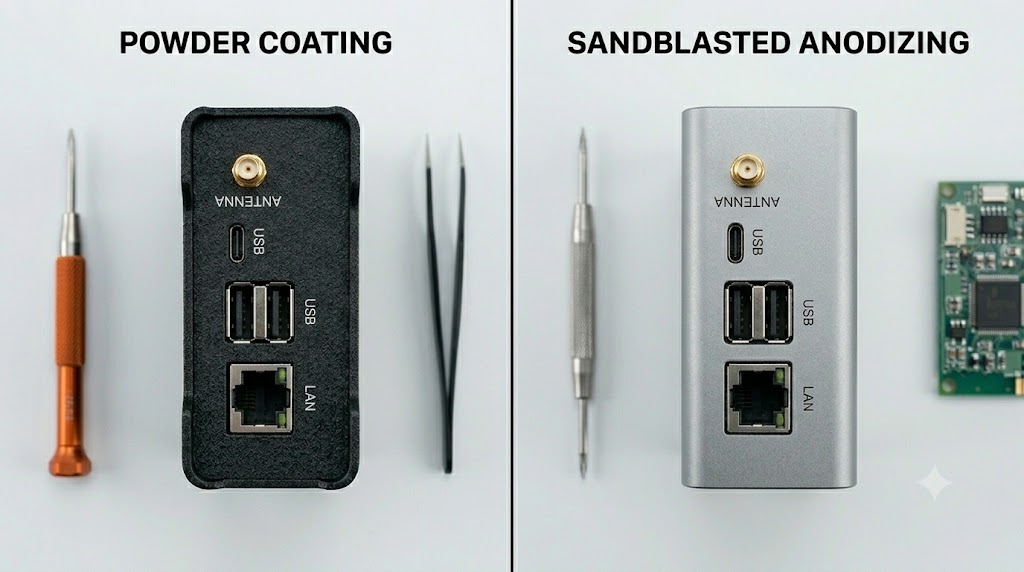
What is Powder Coating?
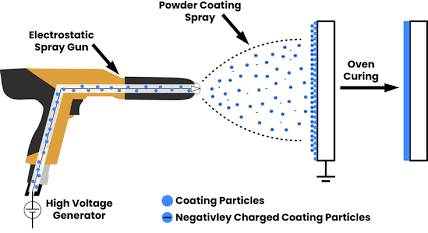
Powder coating is a surface finishing technique that applies a dry polymer or ceramic powder to a part via an electrostatic charge. Unlike traditional liquid paints, powder coating does not require solvents to keep a liquid suspension of binder and filler parts and is instead cured either through heat or ultraviolet light. The result is a thick, durable, high-quality, and attractive finish that is superior to conventional liquid coatings.
Pre-Treatment (Cleaning): The raw metal part is stripped of all dust, machining oils, grease, and natural oxide layers. A chemical conversion layer is often applied to ensure proper paint adhesion and maximize corrosion resistance
Electrostatic Application: The dry powder mixture (made of resins, pigments, and curatives) is sprayed onto the part using an electrostatic spray gun. The gun imparts a negative electrical charge onto the dry powder particles. Because the metal target part is electrically grounded, it acts as a positive electrode. The "opposites attract" physics principle forces the powder to adhere evenly to all sides, corners, and deep crevices of the component.
High-Temperature Curing: The powder-covered component is placed into a curing oven, typically heated between 180°C and 200°C (350°F to 400°F). The heat causes the dry powder to melt and flow smoothly over the surface. It then undergoes a chemical cross-linking reaction, fusing into a solid, highly durable polymer shell that will not run, drip, or sag
Key Advantages of Powder Coating
Exceptional Durability: Powder coating yields a thicker, tougher protective skin than standard liquid paint. It provides top-tier resistance against impacts, physical scrapes, moisture, UV degradation, and harsh weather.
Uniform Cosmetic Finishes: Because it relies on an electrostatic field rather than gravitational spraying, the coating builds up perfectly evenly. It allows for a vast array of high-gloss, matte, or industrial textured/sand grain finishes
Heavy-Duty Electrical Insulation: Cured powder resins act as highly effective electrical insulators. For electronic enclosures, this creates a robust barrier protecting internal printed circuit boards (PCBs) from external Electrostatic Discharge (ESD)
What Is It Used For?
Powder coating is primarily used to provide a highly durable, protective, and decorative finish to metals and other materials that can withstand high temperatures.
Because of its heavy-duty resilience, it is widely utilized across a variety of industrial, commercial, and consumer applications:
1. Industrial & Electrical Enclosures
For networking routers, outdoor 5G base stations, and industrial IoT gateways, powder coating is the go-to finish.
Environmental Shielding: It creates a thick barrier that protects sensitive internal electronics from moisture, salt spray, and harsh weather.
Electrical Insulation: The cured polymer resins act as a natural dielectric insulator, helping to protect internal printed circuit boards (PCBs) against external Electrostatic Discharge (ESD).
2. Automotive Components
The automotive industry relies heavily on powder coating for parts exposed to extreme environments. It is used on wheels/rims, chassis frames, suspension springs, and engine brackets to prevent rust from road salt and resist chipping from flying debris.
3. Architecture & Construction
Aluminum extrusions used in architecture require finishes that last for decades. Powder coating is applied to window frames, outdoor fencing, building facades, and stadium seating because it maintains color and resists fading under intense UV sunlight.
What's anodizing?
Anodizing is an electrochemical process that converts a metal surface into a decorative, durable, corrosion-resistant, anodic oxide layer.
Unlike powder coating or painting—which applies a topical layer on top of the metal—anodizing is fully integrated with the underlying aluminum substrate. It actually changes the microscopic structure of the metal's surface, meaning the finish can never chip, flake, or peel off.
How the Anodizing Process Works
The science relies on acceleration of natural oxidation. When aluminum is exposed to oxygen, it naturally forms a thin, protective oxide film. Anodizing forces this layer to become much thicker and highly structured.
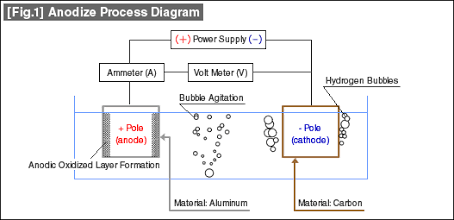
The Acid Bath: Cleaned aluminum components are submerged into an acid electrolyte bath (typically sulfuric acid).
The Electric Current: An electrical current is passed through the liquid. The aluminum parts act as the positive pole (anode), while a set of plates inside the tank act as the negative pole (cathode).
Oxide Layer Formation: The current splits water molecules in the bath, releasing oxygen ions. These ions migrate to the aluminum surface and react with the metal to create a porous, highly regular structure of aluminum oxide (Al₂O₃)
Coloring & Sealing: Because the new oxide layer has millions of microscopic pores, it can absorb vibrant organic dyes (such as black, silver, blue, or gold). Finally, the parts are rinsed in hot water to close or "seal" the pores, locking the color inside and maximizing corrosion defense.
Key Advantages for Electronic Enclosures
Metallic Aesthetics: Because the oxide layer is translucent, anodizing highlights the natural metallic grain and CNC tool marks of the aluminum, providing a premium, high-tech aesthetic.
Dimensional Accuracy: Anodizing adds negligible thickness (typically less than 25um for standard Type II). This makes it highly superior for tight-tolerance enclosures with complex PCB alignments where thick coatings would block port openings.
Thermal Dissipation: Unlike thick powder coatings which trap heat inside like a blanket, an anodized surface retains high thermal emissivity. The metal enclosure continues to act as an effective passive heatsink for internal electronics.
At Evernice,we leverage High-Velocity Mass Customization (HVMC) to serve as your one-stop shop for fully finished sheet metal and machined parts. Whether it’s adding precise cutouts or applying custom graphics, we can customized based on your design. we can manufacture fully finished custom parts within 7 days.
If you have specific machining requirements or a custom design ready. Share your CAD files and technical specifications with us. Our engineering team will review your project and provide a comprehensive, fast quote tailored to your exact manufacturing needs.


