A hinged ABS plastic enclosure is worth considering when your electronics need a defined protective enclosure and convenient access to the internal assembly. The attached lid can make inspection and servicing more manageable, while the enclosure’s depth, opening, mounting arrangement, and cover design determine whether it fits the equipment.
The right product is not simply the smallest enclosure that contains the PCB. It must provide usable internal space, an accessible opening, suitable mounting features, and a configuration appropriate to the installation environment.
This guide focuses on the enclosure itself: its structure, dimensions, lid design, mounting choices, and customization options.
A hinged ABS plastic enclosure combines an ABS body with a lid that remains attached when opened. Depending on the selected model, the enclosure may use latches, other closure arrangements, or different internal mounting features.
The hinge is useful when the enclosure needs to be opened for inspection, configuration, or maintenance. The lid stays with the enclosure instead of becoming a separate part that needs to be placed nearby.
That structural feature does not define every other property. Protection rating, temperature suitability, material grade, opening angle, and available installation options must be confirmed for the exact model.
Evernice’s hinged plastic enclosure range provides a starting point for projects that need this opening arrangement.
Start with how the product will be used after installation.
A hinged enclosure suits an arrangement where the lid should remain attached during access. This can be useful for equipment with internal indicators, settings, or components that require occasional inspection.
A fully removable cover may suit a project that needs access from several directions or has little room for a lid to swing. The cover can be removed from the work area, but it must be handled separately.
The comparison is about the enclosure’s access arrangement, not an automatic difference in durability or protection.
| Product feature | Hinged enclosure | Removable-cover enclosure |
|---|---|---|
| Cover during access | Remains attached to the body | Separates from the body |
| Space to open | Needs clearance for the lid’s movement | Needs space to lift and remove the cover |
| Service arrangement | Suitable when an attached lid is useful | Suitable when unobstructed access is preferred |
| Installation review | Check hinge side, opening angle, and nearby objects | Check cover removal direction and handling space |
| Protection | Confirm the selected model and configuration | Confirm the selected model and configuration |
If the installed enclosure sits beside a wall or another device, check that position before choosing the hinge orientation.
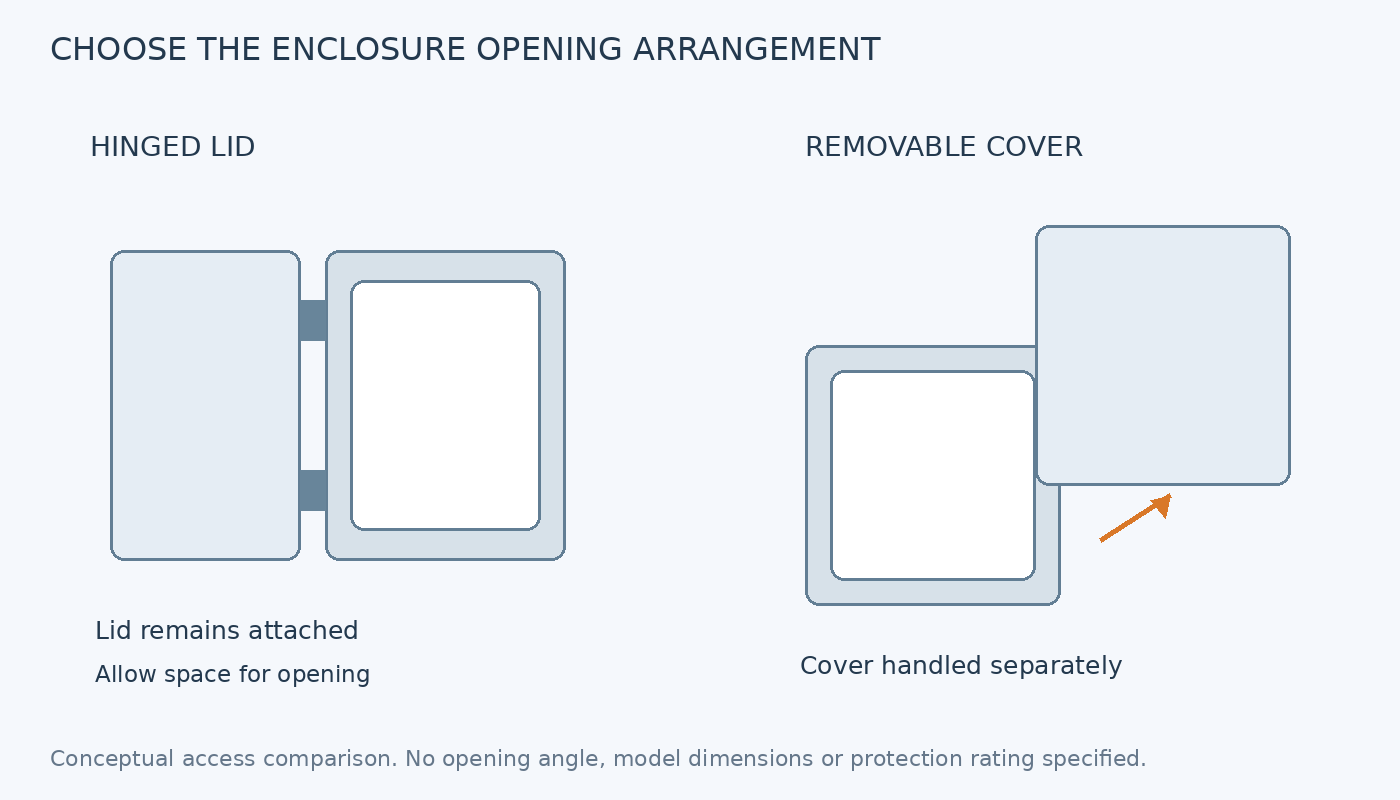
Figure 1. The opening arrangement changes how the product is accessed. These diagrams do not compare protection ratings or model-specific opening angles.
External dimensions help with cabinet or wall layout, but internal drawings determine what the enclosure can contain.
Check three different boundaries:
A body can have enough room at its base while the opening is restricted by its rim or internal features. Likewise, the lid may contain ribs or recesses that reduce usable height above a component.
For an initial product comparison, define the complete electronics envelope. Include the PCB or mounting plate, component heights, connected plugs, and the intended wiring route.
Then compare candidate enclosures using their actual internal drawings. Avoid estimating internal dimensions by subtracting an assumed wall thickness from the outside size.
Choose enough space for assembly and access, while keeping the overall product appropriate to its installation.
Enclosure depth changes both the available internal space and the finished product’s profile.
A shallow enclosure may suit a compact electronic assembly with low-profile components and a simple internal arrangement. It can also be useful where projection from a wall or panel needs to be limited.
A deeper enclosure gives more room to evaluate taller components, internal plates, or more complex wiring layouts. However, depth alone does not guarantee that the enclosure has the required mounting area or opening size.
Compare depth using the assembled product rather than the bare PCB. Components mounted in the lid, plugs attached to internal connectors, or wiring above the board can change the space requirement.
Ask whether the quoted dimension includes the cover and whether the drawing identifies internal depth separately. A taller lid and a deeper base do not necessarily provide the same mounting arrangement.
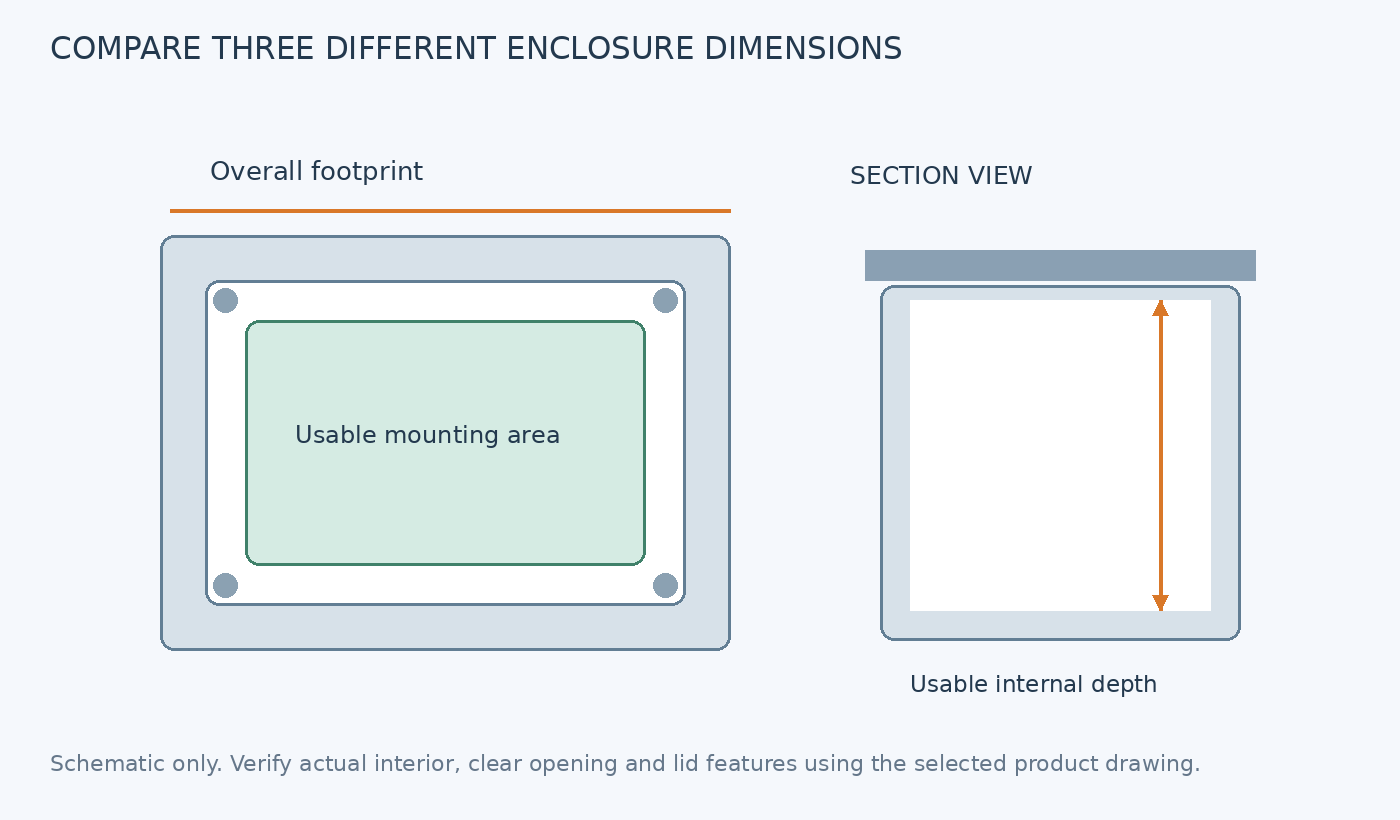
Figure 2. Review the outside footprint, usable mounting area, and internal depth separately. The drawing contains no catalog dimensions.
An opaque lid provides a closed exterior appearance and space to consider a product label, printed identification, or a customized operator interface.
A viewing cover can be useful when internal status information needs to be observed without opening the enclosure. Its usefulness depends on the position of the display or indicators and the available viewing area.
If a transparent version is offered, confirm the cover material separately from the base material. A product family described by its ABS base can use another material for a transparent cover. Do not assume that a clear lid is made from ABS or has identical properties to an opaque version.
For either design, check cover geometry and usable surface area before placing a display, label, or control opening.
Choose the cover for the product’s actual interaction needs. A transparent cover is not automatically necessary simply because the enclosure contains electronics.
The enclosure must suit both the internal assembly and the surface on which the finished device is installed.
Review the available internal features for the exact size. These may include molded mounting points or provision for a separate internal plate; availability should be confirmed rather than assumed across a whole product family.
A mounting plate can provide an intermediate surface for arranging equipment. Direct PCB mounting may support a more compact assembly when the enclosure’s features match the board layout.
For the outside of the enclosure, check the mounting drawing, available brackets or flanges, and the clearance required around the installed body.
If the lid carries components, include their space and access requirements in the product review. Confirm that the lid can still open as intended after the complete assembly is installed.
Choose the enclosure using the stated conditions of the application.
For indoor equipment, review temperature, humidity, dust, handling, and any cleaning exposure relevant to the location. Hinged ABS enclosures can be considered for controlled commercial environments, indoor network installations, and other applications where the selected model’s specifications fit the requirements.
For outdoor exposure, request evidence for the specific material and product configuration. ABS as a material name does not by itself establish UV durability, outdoor service life, or a particular temperature range.
Likewise, a protection rating addresses defined conditions; it is not a general statement that every environment is suitable.
Ask the supplier to confirm the applicable model documentation. If the enclosure will be modified, assess the resulting configuration rather than relying only on the original unmodified product description.
A standard hinged ABS enclosure can be a starting point for a branded electronic product.
Typical items to discuss include panel openings, printed identification, labels, and other changes supported for the selected model. Evernice’s linked hinged ABS product listing identifies customization options including cutouts, silkscreen, labels, and laser engraving; confirm suitability and the finished result for your chosen configuration.
Place proposed openings and markings on the enclosure drawing. Review their relationship to the hinge, closure, sealing region, and internal mounting space.
For a visible lid, consider how the enclosure will look in normal use. Keep labels readable in the intended orientation and check that the cover’s available surface suits the design.
Avoid choosing an enclosure solely from a photograph and resolving every modification afterward. A short review of the finished product can identify a better starting size or cover arrangement.
| Selection item | Information to compare |
|---|---|
| Body material | Exact material designation and relevant product documentation |
| Overall dimensions | Installed footprint and projection, including external features |
| Usable interior | Mounting area, internal depth, opening, and lid intrusions |
| Lid arrangement | Hinged or removable, opening direction, and access space |
| Cover appearance | Opaque or viewing option, material, and usable face area |
| Mounting | Internal supports, plate options, and external mounting method |
| Environment | Documented suitability for the intended operating conditions |
| Customization | Supported openings, markings, and configuration review |
Request a drawing and, where appropriate, a sample before finalizing the enclosure. Review the product with the actual internal assembly rather than checking only empty-enclosure dimensions.
A well-chosen enclosure should support the equipment’s installation, everyday use, and service access as a complete product.
Evernice manufactures electronic enclosures, including ABS plastic enclosures, aluminum enclosures, and die cast aluminum enclosures.
Explore our hinged ABS plastic enclosures to review available product options. You can also view a hinged ABS enclosure product listing and discuss the size and configuration required for your application.
For changes to the enclosure, see our customization services. Contact Evernice with your assembly envelope, mounting arrangement, and intended environment to discuss suitable options.


